
How to read a creatine label before buying
Five practical checks for creatine amounts, blends, certification and price—with a real capsule example.
Look for a named ingredient, an explicit amount and a serving size you understand. Those three checks make product comparisons much more useful.
See what to look for ↓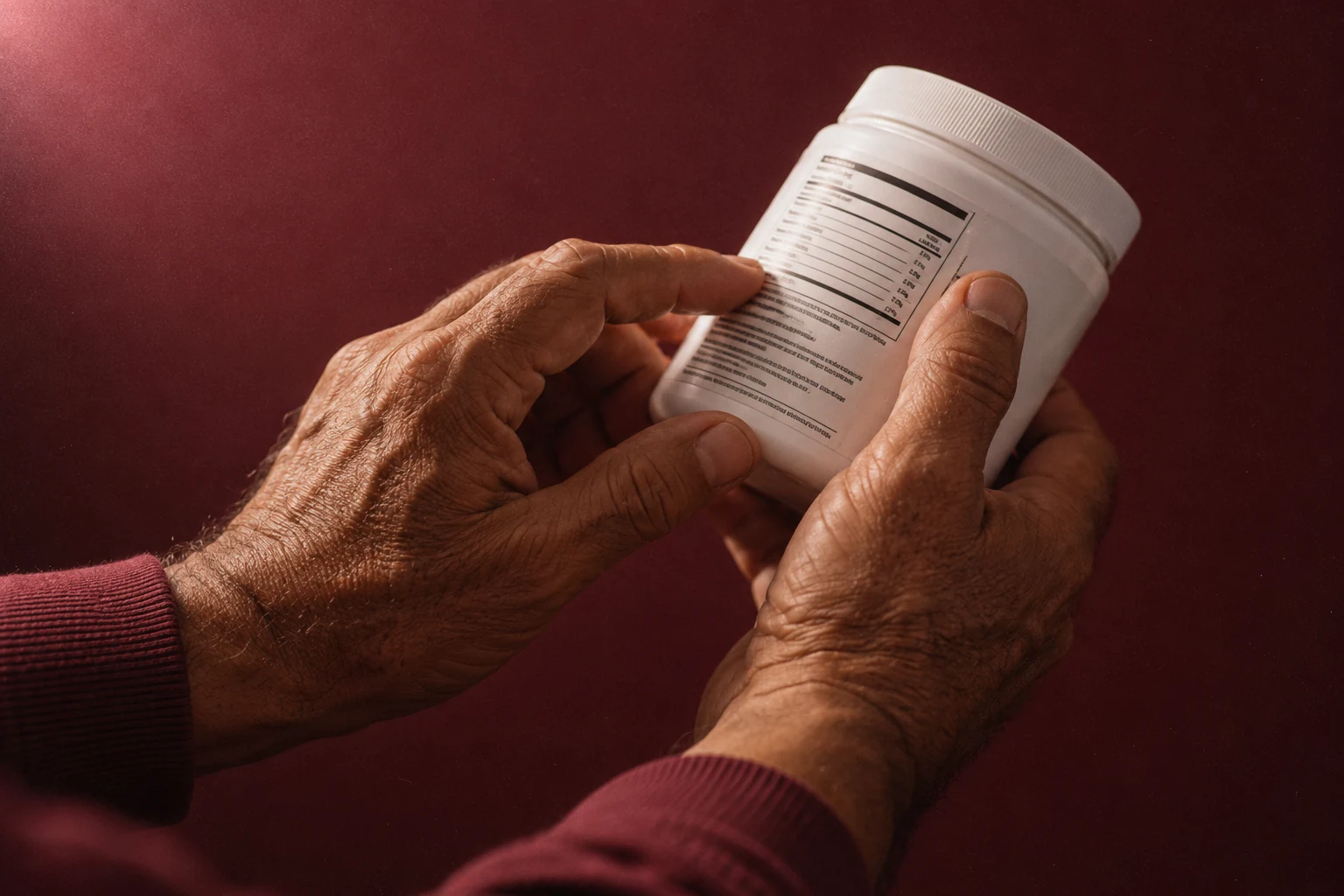
1. Find the actual ingredient
For a straightforward first comparison, look for creatine monohydrate. NIH identifies it as the most extensively studied form; alternative forms have not established a consistent advantage. “Advanced” is not an ingredient, and “micronized” should not be read as proof of better training results. NIH evidence overview.
2. Pair every number with a serving size
A label amount can refer to multiple capsules. Copy the serving size before copying the amount. FDA’s labeling guide explains how quantities and servings are declared. FDA label guidance.
Read the label in this order
Serving size6 capsules
Creatine monohydrate4,500 mg
Amount in one capsule750 mg
A 120-capsule bottle at that strength contains 90 g of declared monohydrate: 120 × 0.75 g. It does not contain 120 servings at the manufacturer’s six-capsule serving. View the original label.
3. Separate creatine from the rest of the scoop
A plain powder is easier to compare because there may be only one ingredient. In a flavored or multi-ingredient formula, total powder weight is not necessarily creatine weight. Find a separate creatine line.
If the label discloses only a combined blend weight, you cannot assign an exact creatine amount. Proprietary-blend rules permit some individual amounts to remain undisclosed; ingredient order does not supply the missing number. FDA blend rules.
| Label detail | What you can conclude |
|---|---|
| Creatine monohydrate: 5 g | The declared ingredient amount is visible. |
| Performance blend: 5 g, including creatine | The creatine amount may be unknown. |
| Five grams per scoop on the front | Read the facts panel to find out what those grams refer to. |
The 5 g entries above are illustrative label examples, not real products or dosing instructions.
4. Check what a certification actually covers
Search for the exact product in a certifier’s directory. A certified brand can also sell products that are not certified. Flavor, product name and market can matter. Open the NSF Certified for Sport directory.
Certification can help evaluate quality and banned-substance risk; it does not promise a strength gain or establish personal suitability. We do not assign a certification badge to the examples below without an exact directory match.
5. Calculate the cost of an equal amount
Write down the one-time price, delivery, tax, package quantity and date. A subscription discount is a separate offer, not the default price. Use total declared monohydrate grams to compare formats.
Keep the chemical form and units consistent. Milligrams ÷ 1,000 = grams.
Our powder-versus-capsules guide shows the live-page prices checked for two actual products and the arithmetic behind the comparison.
Before you finish the purchase
- Match the listing to the actual bottle or tub you are buying.
- Read the other ingredients, warnings and storage instructions.
- Confirm whether the offer renews automatically.
- Save a dated label and order receipt so changes are visible later.
The compared products are adult products and advise medical consultation for pregnancy, nursing, medication use or medical conditions, especially kidney conditions. Read the manufacturer’s cautions. A readable label helps you make an informed choice; it does not decide whether you should use creatine.
Sources & research notes
Checked October 7, 2026. This guide combines published research and label information with our editorial buying criteria. Manufacturer pages establish product details, not independent proof of benefit. No hands-on testing or medical review.
- NIH: creatine evidence overview
- FDA: serving sizes and proprietary blends
- NSF Certified for Sport: product directory
- NOW: capsule label and warnings
- NOW: powder label